10 Technologies That Will Change the World

Key technologies shaping the future including AI and renewable energy transforming industries and everyday life globally.
Technology has always been a driving force behind human progress, but the pace of innovation today is unlike anything the world has experienced before.
From intelligent machines capable of solving complex problems to medical breakthroughs that could eliminate inherited diseases, the technologies that will change the world are already transforming how people live, work, communicate and interact with their surroundings.
Businesses are embracing automation to improve efficiency, healthcare providers are using artificial intelligence to diagnose illnesses more accurately and governments are investing billions in clean energy solutions to combat climate change.
At the same time, consumers are benefiting from smarter devices, faster connectivity and personalized digital experiences that were once considered science fiction.
The next decade is expected to bring even greater technological disruption. Emerging innovations are not only creating new industries but also reshaping traditional ones, opening opportunities for businesses, entrepreneurs and professionals willing to adapt.
As these advancements mature, they will influence global economies, redefine workforce requirements, and address some of humanity's biggest challenges.
Understanding the technologies that will change the world is no longer just an interest for technology enthusiasts. It has become essential knowledge for business leaders, students, investors and anyone preparing for the future.
Whether you want to remain competitive in your career, identify new investment opportunities, or simply stay informed about the latest innovations, keeping up with future technologies provides valuable insights into where society is heading.
This guide highlights ten groundbreaking innovations expected to have the greatest global impact. You'll also learn how these emerging technologies are transforming industries, what challenges they present and why they are considered some of the most important technology trends shaping the coming years.
1. Artificial Intelligence (AI) and Machine Learning
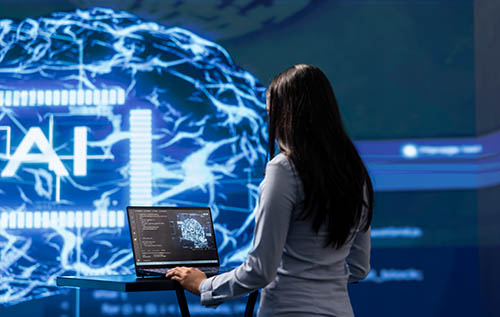
Artificial Intelligence is one of the most powerful technologies that will change the world, driving innovation across nearly every industry. AI systems can analyze data, recognize patterns, and make decisions faster than humans, making them essential in healthcare, finance, education and marketing.
From chatbots and virtual assistants to predictive analytics and autonomous systems, AI is already reshaping how businesses operate. In healthcare, AI helps detect diseases early.
In business, it improves customer experience and automates repetitive tasks. As AI continues to evolve, it will become more advanced in reasoning, creativity and problem-solving.
AI is widely considered one of the most important emerging technologies shaping the digital future.
2. Quantum Computing
Quantum computing represents a major leap beyond traditional computing. Instead of using bits (0s and 1s), quantum computers use qubits, allowing them to process complex calculations at incredible speeds.
This makes quantum computing one of the most promising future technologies, especially for solving problems in cryptography, drug discovery, climate modeling, and financial forecasting.
Although still in development, quantum computing has the potential to revolutionize industries by solving problems that are currently impossible for classical computers.
3. Biotechnology & Gene Editing
Biotechnology is transforming medicine and agriculture. One of its most groundbreaking advancements is gene editing, especially CRISPR technology, which allows scientists to modify DNA with precision.
This innovation can help treat genetic disorders, improve crop resistance, and even extend human lifespan. It is one of the most impactful technologies shaping the future of healthcare.
As biotechnology advances, personalized medicine will become more common, offering treatments tailored to individual genetic profiles.
4. Renewable Energy Technologies
Renewable energy is critical for addressing climate change and building a sustainable future. Solar, wind, hydro and hydrogen energy systems are rapidly improving in efficiency and affordability.
These innovative technologies are reducing dependence on fossil fuels and lowering carbon emissions worldwide. Smart energy grids and advanced battery storage systems are also making renewable energy more reliable and accessible.
The shift toward clean energy is one of the most important global transformations of this century.
5. Robotics & Automation
Robotics and automation are transforming industries such as manufacturing, logistics, healthcare and agriculture. Robots can now perform tasks with high precision, speed and efficiency.
Automation powered by AI is reducing manual labor and increasing productivity in factories and warehouses. In the future, robots will play a bigger role in everyday life, from home assistance to medical surgery.
This makes robotics one of the most practical technologies that will change the world in daily operations and industrial systems.
6. Internet of Things (IoT)
The Internet of Things (IoT) is one of the most impactful technologies that will change the world by connecting everyday devices to the internet. From smart homes to industrial sensors, IoT enables machines to communicate and share data in real time.
Smart thermostats, wearable fitness trackers, and connected cars are already part of daily life. In industries, IoT improves efficiency by monitoring equipment, reducing downtime, and optimizing operations.
As IoT expands, billions of devices will become interconnected, creating smarter cities and more efficient systems powered by real-time data.
7. Blockchain Technology
Blockchain is a decentralized digital ledger that records transactions securely and transparently. It is best known for powering cryptocurrencies, but its use goes far beyond digital money.
This emerging technology is being used in supply chain tracking, digital identity verification, healthcare records and secure data sharing. Its key advantage is trust once data is recorded, it cannot easily be changed.
Blockchain is considered one of the most secure future technologies, especially for industries that require transparency and data integrity.
8. Augmented Reality (AR) and Virtual Reality (VR)
AR and VR are transforming how people experience digital content. Augmented Reality overlays digital elements onto the real world, while Virtual Reality creates fully immersive environments.
These innovative technologies are widely used in gaming, education, training and retail. For example, VR allows medical students to practice surgery in a simulated environment, while AR helps shoppers visualize products before buying.
As hardware becomes more affordable, AR and VR will become mainstream tools for work, entertainment and communication.
9. Autonomous Vehicles
Autonomous vehicles are self-driving cars that use AI, sensors and machine learning to navigate without human input. They are one of the most exciting technologies that will change the world, especially in transportation.
These vehicles aim to reduce traffic accidents, improve road efficiency, and lower transportation costs. Companies are already testing autonomous taxis, trucks and delivery vehicles.
Although full adoption will take time due to regulations and safety concerns, autonomous driving is expected to reshape urban mobility in the future.
10. 3D Printing
3D printing is revolutionizing manufacturing by allowing objects to be created layer by layer from digital designs. This technology reduces waste, lowers production costs and enables rapid prototyping.
It is used in healthcare for prosthetics, in aerospace for lightweight parts, and in construction for building structures.
As the technology advances, 3D printing will enable on-demand production, making it one of the most practical and disruptive technologies shaping the future.
How These Technologies Will Transform the World
The technologies that will change the world are not developing in isolation they are reshaping entire industries at once. From healthcare and education to transportation and manufacturing, digital transformation is accelerating faster than ever.
In healthcare, AI-powered diagnostics, biotechnology and wearable IoT devices are improving early disease detection and personalized treatment. Patients can now receive more accurate care with fewer hospital visits.
In business and finance, blockchain and artificial intelligence are improving transparency, reducing fraud and automating decision-making. Companies are also using predictive analytics to understand customer behavior and improve services.
Manufacturing is becoming highly automated through robotics, 3D printing and smart factories. This reduces production costs while increasing efficiency and customization.
Education is also evolving. AR and VR create immersive learning experiences, while AI-powered platforms provide personalized tutoring for students worldwide.
Transportation is shifting toward autonomous vehicles, smart traffic systems and electric mobility solutions, making travel safer and more efficient.
Key Challenges and Ethical Concerns
While these emerging technologies offer huge benefits, they also introduce serious challenges that must be addressed responsibly.
- Job Displacement: Automation and AI may replace some traditional jobs.
- Privacy Risks: IoT devices and AI systems collect large amounts of personal data.
- Cybersecurity Threats: More digital systems increase vulnerability to attacks.
- Ethical AI Use: Bias in algorithms can lead to unfair decisions.
- Regulation Gaps: Laws often struggle to keep up with rapid innovation.
Governments and organizations must work together to ensure these future technologies are used ethically and safely.
Future Trends Beyond 2030
Looking ahead, the technologies that will change the world will become even more advanced and interconnected. Several key trends are expected:
- AI systems becoming more autonomous and human-like in reasoning
- Quantum computing solving real-world global problems
- Fully smart cities powered by IoT and renewable energy
- Widespread adoption of autonomous transportation systems
- Personalized medicine based on genetic data and biotechnology
- Fully digital economies powered by blockchain systems
These advancements will create a world where technology is deeply integrated into every aspect of life.
Conclusion
The world economy and everyday existence are being changed by how quickly technology is transforming. There are a lot of cutting-edge technologies that will change the world, which include biotechnology, machines, artificial intelligence and energy from renewable sources.
These future technologies that will change the world are not only making progress in science but also changing the way companies work. New technologies that are changing the future are being used by businesses in all fields to become more efficient, cut costs and provide better services.
As we move into the next ten years, technology of the next age will be very important in solving problems around the world. Problems like climate change, getting health care, cyber threats and city growth all need new, tech-based answers. Because of this, a lot of money is being put into technologies that will shape the future by many states and businesses.
The rise of innovative technologies changing the world also opens up new chances for companies and entrepreneurs. Healthcare, transportation, schooling and manufacturing are just a few of the fields that will be changed by new technologies in the future.
Experts widely agree that the top technologies that will change the world in the future will have a big effect on digital creativity, economic growth and the development of the workforce. A lot of these new technologies should be fully developed by the end of the decade, which backs up what was said about 10 technologies that will change the world by 2030.
Ultimately, these advancements highlight how emerging technologies shaping the future of business and innovative technologies that will transform industries will shape the next age of progress for people. People and businesses that are open to new ideas will be better prepared to do well in a digital world that is changing quickly.
Frequently Asked Questions (FAQs)
1. What are the most important technologies that will change the world?
Artificial intelligence, quantum computing, biotechnology, renewable energy, robotics, IoT, blockchain, AR/VR, autonomous vehicles and 3D printing are among the most influential.
2. Why are these technologies important?
They solve global problems, improve efficiency and create new opportunities in industries such as healthcare, transportation, and communication.
3. Which technology will have the biggest impact in the future?
AI is widely considered the most impactful, as it influences almost every other technology.
4. Are these technologies already in use?
Yes, many of them like AI, IoT and blockchain are already widely used, while others are still developing.
5. Will these technologies replace human jobs?
Some jobs will be automated, but new roles will also be created in tech-driven industries.
Read More: Top 20 AI Innovations to Watch in 2026
More Articles
 19 Nov 2026
Vibe Coding: Benefits, Risks and How It Works
Vibe coding simplifies software development with AI, helping beginners build websites, create applications and understand potential risks.
 18 Nov 2026
API Rate Limiting: How It Works and Why It Matters
Discover the best AI skills to put on your CV in 2027, including ChatGPT, generative AI, prompt engineering, data analysis, and AI automation to attract employers.
 17 Nov 2026
Khmer AI Tools: Best AI Solutions for Cambodian Users
Explore the best Khmer AI tools for Cambodian users, including AI writing, translation and business productivity solutions.
 16 Nov 2026
How to Detect Malicious Website Redirects and Scripts
Identify malicious website redirects, detect harmful JavaScript, investigate website malware and protect visitors from suspicious online activities.