AI vs Human Intelligence: Comparison, Pros & Cons
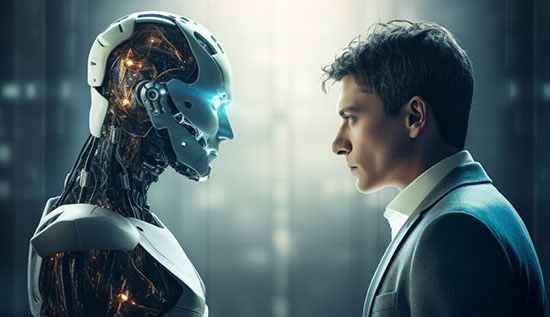
AI vs Human Intelligence comparison covering differences and the future of human intelligence vs machine intelligence.
The debate surrounding AI vs Human Intelligence has become one of the most important discussions in modern technology and society. As AI systems continue to evolve and influence industries worldwide, people are wondering how machines can compete with the brain's amazing cognitive skills.
Computer vision, machine learning, deep learning and natural language processing have changed how businesses work, solved problems and made choices. Despite these advances in technology, human intelligence is still one of the most complicated and powerful ways of knowing.
The comparison between Artificial intelligence vs human intelligence is not just about determining which one is smarter. Instead, when it comes to facts, problems, learning from experience and adapting to new situations, you need to know how each system works.
With the help of formulas, AI systems can look at very large datasets, do jobs over and over and make predictions, but humans are better at emotional intelligence, creativity, intuition and moral reasoning. This contrast creates a fascinating discussion about the difference between AI and human intelligence and their respective strengths and weaknesses.
Another key aspect of the AI vs human brain the way these two systems make decisions and learn is up for discussion. AI learns from data training and computational models, while human brains grow through experience, emotions and social contact.
Because of these differences, machines can do some jobs better than people, like analyzing data or spotting patterns, but they still have trouble with creativity, empathy and moral reasoning.
As businesses, researchers and governments increasingly adopt AI technologies, questions about can AI replace human intelligence are becoming more common. Will robots one day be better than people? Or will AI just be a powerful tool that makes people more creative and productive? These questions will have a big impact on the future of technology and workplaces all over the world.
This comprehensive guide will explore the AI vs Human Intelligence comparison, looking into how each type of intelligence works also, what their pros and cons are and whether AI could ever fully replace human intelligence. By looking at real-life examples and practical insights, readers will get a better sense of how the relationship between people and smart machines is changing.
How to Understand AI and Human Intelligence
A computer system called artificial intelligence (AI) is made to mimic human cognitive processes like language understanding, learning, reasoning and problem-solving. In discussions about AI vs Human Intelligence, AI is often thought of as tools being able to do things that normally require smart people to do.
Algorithms and data-driven learning models are very important to modern AI systems. These systems look at very large datasets, find trends and use statistical methods to guess what will happen or make decisions automatically. This capability forms the foundation of human intelligence vs machine intelligence comparisons.
Key Characteristics of Artificial Intelligence
There are a few things that set artificial intelligence apart from human cognition:
- Machine learning methods for learning based on datasets
- Complex math ought to be done efficiently
- Being equipped to quickly look at very large numbers
- Consistent work without becoming exhausted
- Machines that do tasks repeatedly
Artificial intelligence does exceptionally well in some technical and scientific disciplines because of all of these variables.
Example of AI in Action
Here are two practical AI vs human intelligence examples that demonstrate AI capabilities:
Example 1: Medical Diagnosis Systems
Medical images, patient data and diagnostic developments are all looked at through AI-powered healthcare tools. Cancer and other diseases can be found earlier with these systems than with numerous additional methods.
Example 2: Financial Fraud Detection
AI algorithms help banks keep an eye on activities all the time. AI systems look for strange trends in millions of financial transactions and immediately report possible fraud.
These cases highlight how Artificial intelligence vs human intelligence comparisons often show AI outperforming humans in data-heavy tasks.
What is Human Intelligence?
Human intelligence is the sum of all of our cognitive skills, such as our ability to think, learn, be creative, understand emotions and solve difficult problems. When discussing AI vs Human Intelligence, the brain continues to show the smartest and most flexible system of knowledge that we know that exists.
processes, personal events, social interactions and emotional understanding all have an effect on how people think and learn. This lets people make tough choices that use ethics, intuition, understanding, and logic together.
Key Characteristics of Human Intelligence
The difference between AI and human intelligence becomes clearer whenever we look at the unique powers of human thinking:
- Emotional understanding and showing understanding
- Thinking in an imaginative and creative manner
- Ethical thinking and moral deductive reasoning
- Ability to acquire information with limited understanding
- Ability for adaptation to new circumstances
In circumstances in which empathy, creativity and making complex decisions are needed, these traits give humans an important competitive advantage.
Example of Human Intelligence
Consider two real-world examples illustrating human intelligence vs machine intelligence:
Example 1: Creative Writing and Storytelling
People are capable of creating narratives, novels, and scripts that make their readers experience overwhelmed with feelings. These works come from deep emotional experiences and cultural knowledge.
Example 2: How to Lead in an Emergency
Leaders need to be equipped to balance reasoning, understanding and making moral choices in an emergency. These are skills that machines can't fully reproduce.
These examples demonstrate why discussions around AI vs human intelligence which is better remain complex and multifaceted.
Difference Between AI and Human Intelligence
Understanding the difference between AI and human intelligence needs to look at how each system handles data, learns, and changes to meet new obstacles. A big part of the AI vs. Human Intelligence debate is whether robots can really copy the brain's cognitive depth and flexibility.
Learning Mechanisms
One of the most significant contrasts in the AI vs human brain discussion lies in how learning occurs.
AI Learning Process
Data training and algorithms are the main ways that artificial intelligence learns. Machine learning models look at huge sets of data to find trends. Over time, these patterns help the models make better predictions.
Some things that make AI learn include the following:
- Necessitates a lot of information to acquire knowledge regarding
- Recognition of patterns makes it understand
- Improvement by optimizing the source code
- Equipped to quickly handle millions of points of information
Human Learning Process
People grows into smarter through experience, observation, and interacting with others emotionally. The essential components include the following:
- Getting information from small things
- Changing determined by the circumstances
- Employing your creative abilities and natural abilities
- Getting stronger by means of everyday occurrences
This contrast highlights the broader AI vs human intelligence comparison.
Decision-Making
Another key area in the Artificial intelligence vs human intelligence debate is an opportunity for making judgments.
AI Decision-Making
Artificial Intelligence systems use mathematical models of probability and statistical research to decide what they will accomplish. Some of the advantages include the following: consequences which endure, predictions in accordance with datasets and structured processing of information with fewer discrepancies.
But artificial intelligence doesn't know what's right from wrong or understand how people experience.
Human Decision-Making
When people make options, ranging they take into consideration numerous variables:
- Being diagnosed with compassion and empathy
- Questions of morality to think concerning
- Background social context
- Receiving perceptive and innovative
These capabilities explain why many experts argue that can AI replace human intelligence remains an unlikely outcome in the near future.
Advantages and Disadvantages of AI and Human Intelligence
The topic of AI vs human intelligence advantages and disadvantages is very important for figuring out how these processes affect businesses and people in general also. Artificial intelligence and human thought each have their own strengths and weaknesses that affect how well they work in different situations.
Advantages of Artificial Intelligence
AI has a lot of great benefits that have sped up its use in many areas, including healthcare, banking, transportation, and customer service.
- Speed and Ease of use: AI systems can quickly handle huge amounts of data. This ability is much faster than humans at doing analytical jobs.
- Making Routine Tasks Easier to do: AI helps businesses automate jobs that they do over and over again, like data entry, monitoring systems and predictive analytics.
- Operation All the Time: Unlike people, AI systems can work 24 hours a day, seven days a week without getting tired or less productive.
- Data Analysis that is very Accurate: AI algorithms find trends and oddities that people might have overlooked.
These advantages play a key role in the ongoing AI vs human intelligence comparison.
Disadvantages of Artificial Intelligence
Artificial intelligence has important limits, even though it can do many different things.
- Never knowing how to contend with sentiments
- Dependence on the accuracy of the training information
- Not sufficient imagination and critical thinking
- Concerns about ethical conduct as well as discrimination
These factors contribute to debates about can AI surpass human intelligence in the future.
Advantages of Human Intelligence
In areas where imagination and emotional understanding are important, human intelligence is still dominant. Some key strengths have the following characteristics: imagination and imaginative thoughts, empathy for the opinions of other people, responsible thinking and making challenging choices.
These attributes reinforce the argument that AI vs human intelligence which is better depends on the task being performed.
Disadvantages of Human Intelligence
Nevertheless, human intelligence has its limitations: limited memory compared to computers, being susceptible to fatigue, using emotion to make decisions and slower processing of large documents.
These limitations explain why human intelligence vs machine intelligence comparisons often highlight complementary strengths rather than direct competition.
Can AI Surpass Human Intelligence in the Future?
The question can AI surpass human intelligence in the future is a very controversial subject in both science and philosophy. Some experts think that artificial intelligence could someday be as smart as humans or smarter, while others say that human intelligence has qualities that machines are unable to copy.
The Concept of Artificial General Intelligence
Narrow AI systems are what we have now. This means they are very good at doing just a few things, like recognizing images, translating languages or analyzing data.
Artificial General Intelligence, or AGI, refers to a computer system that can do any intellectual job a person can do. This idea is very important when people talk about AI vs. Human Intelligence.
In theory, machines could match humans in their ability to reason, learn, and solve problems if AGI becomes an established fact.
Factors Supporting AI Advancement
Several technological trends point to the simple fact that AI could keep getting better very quickly:
- Adding a greater amount of computing capacity
- The explosive development of cloud computing and massive amounts of data
- Improvements to methods for learning from machines
- The growth of neural network technology concepts
These developments contribute to ongoing debates about AI vs human intelligence which is better.
Why Human Intelligence May Remain Unique
Even though artificial intelligence is getting better, an increasing number of experts think the differences between human intelligence and machine intelligence will still be substantially distinct. Some reasons include the following:
- Receiving conscious and knowing yourselves
- Sensitivity of feelings and compassion
- Why is this ethical to do so?
- Creativity that comes from everyday situations
These characteristics make it unlikely that can AI replace human intelligence will become reality anytime soon.
Conclusion
The discussion around AI vs Human Intelligence as AI becomes more commonplace in business and everyday life, the need for it keeps growing. Many experts don't see the connection as a competition, but as a partnership where each system brings its own strengths. In the ongoing debate about Artificial intelligence vs human intelligence, it is clear that machines and humans excel in different areas.
AI systems are very good at quickly and accurately processing huge datasets, finding patterns, and doing jobs over and over again. AI is useful in fields like healthcare, banking, logistics and customer service because it can do these things.
Human intelligence, on the other hand, is best at being creative, understanding emotions, making moral decisions and handling difficult problems. These qualities highlight the fundamental difference between AI and human intelligence and explain why human cognition remains essential in leadership, innovation and social interaction.
Real-world AI vs human intelligence examples show that using both types of knowledge together lead to the best results. For example, doctors can use AI-powered tools to look at medical scans, but they will still use their own knowledge and compassion to decide what care to give. In the same way, financial experts may use AI to find trends in the market, but they still rely on human judgment to weigh risks and make long-term plans.
The future of human intelligence vs machine intelligence will likely focus on cooperation rather than replacement also. While technology will continue advancing, the question of can AI replace human intelligence remains uncertain because machines lack emotional awareness, moral reasoning, and genuine creativity. For this reason, many experts believe that AI vs human intelligence which is better depends on the specific task being performed.
Overall, using both artificial intelligence and human understanding together is the most effective method. Organizations and societies can make smarter decisions and drive innovation in the years to come by using both the analytical power of machines and the creative thought of people.
Read More: Federated Learning: Privacy-Preserving & Secure AI
More Articles
 26 May 2026
Windows 11 Performance Tips to Speed Up Your PC
Speed up your PC with practical Windows 11 performance tips to reduce lag, improve responsiveness, and keep your system running smoothly.
 25 May 2026
Best Free Websites to Learn Coding for Beginners in 2026
Best free websites to start coding in 2026 with step-by-step guidance and free online coding courses with certificates.
 25 May 2026
What Is API and How Does It Work? Beginner Guide
Easy guide to what is API, how APIs work, and how different applications connect through API integration in everyday technology.
 25 May 2026
10 Things Every IT Student Must Know in 2026 Guide
A smart roadmap for IT students covering essential skills, beginner study tips, and key knowledge needed in 2026.