Collaborative Robots in Modern Workplaces: Benefits & Uses
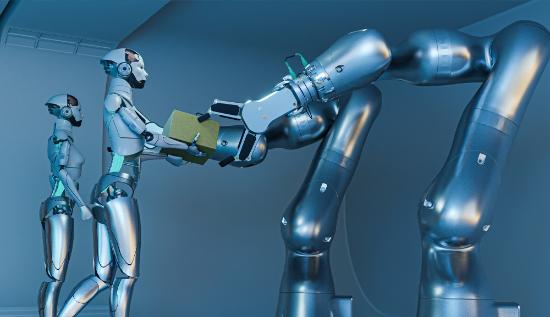
Discover how collaborative robots (cobots) are transforming modern workplaces through human-robot collaboration, automation, and productivity.
In the rapidly evolving world of automation, collaborative robots—also known as cobots—have become a defining element of the modern workplace. These intelligent, flexible machines are designed to work safely alongside humans, transforming the traditional perception of factory automation. Unlike industrial robots that operate behind safety fences, collaborative robots in modern workplaces are built for cooperation, enhancing productivity, safety, and innovation.
In this article, we’ll explore how cobots in industry are reshaping business operations, discuss the wide range of cobot applications in business, and highlight the main benefits of collaborative robots in modern workplaces—from cost savings to improved employee satisfaction. We’ll also look at examples of cobots working alongside humans and how workplace automation with cobots is redefining the future of work.
What Are Collaborative Robots (Cobots)?
Collaborative robots are advanced robotic systems engineered to work interactively with human operators. Unlike traditional industrial robots that require isolation due to safety concerns, cobots feature integrated sensors, lightweight materials, and sophisticated control software that allow them to operate safely next to humans.
The term “cobot” comes from “collaborative robot”, and these machines are designed to complement human skills rather than replace them. They handle repetitive, dangerous, or ergonomically challenging tasks while allowing employees to focus on creative, analytical, and supervisory roles.
This concept of human-robot collaboration represents a major shift in the evolution of workplace automation. It brings together the precision and endurance of machines with the problem-solving and adaptability of people—creating smarter, safer, and more efficient production environments.
The Rise of Cobots in Industry
The adoption of cobots in industry has accelerated dramatically over the past decade. As technology becomes more affordable and easier to integrate, companies in sectors such as manufacturing, logistics, healthcare, and retail are deploying collaborative robots to increase efficiency and maintain competitiveness.
In manufacturing, collaborative robots for manufacturing are used for tasks like assembly, packaging, welding, and material handling. These robots don’t require extensive reprogramming or costly infrastructure changes, making them ideal for small and medium-sized enterprises (SMEs).
The appeal of cobots in industry also lies in their flexibility. Traditional industrial robots are often fixed in place and optimized for a single task, while cobots can be easily redeployed to different workstations as production needs evolve. This adaptability supports lean manufacturing practices and makes businesses more responsive to market changes.
Human-Robot Collaboration: A New Era of Teamwork
At the heart of the cobot revolution is human-robot collaboration. This partnership between people and machines enables an entirely new workflow dynamic. Cobots can perform repetitive or hazardous jobs—such as lifting heavy items or handling toxic materials—while human workers manage quality control, problem-solving, and customization tasks.
In modern workplace robotics, this synergy boosts both efficiency and morale. Workers no longer feel replaced by automation; instead, they gain valuable robotic teammates that reduce strain and enhance job satisfaction.
For instance, in assembly lines, examples of cobots working alongside humans include robots that hold or position parts while workers perform precise tasks requiring dexterity and judgment. In logistics centers, cobots transport goods to human packers, saving time and reducing fatigue.
This blend of strengths highlights how human-robot collaboration not only improves productivity but also creates a safer, more balanced working environment.
Collaborative Robots for Manufacturing: Transforming Production Lines
Collaborative robots for manufacturing are one of the most impactful innovations in industrial automation. From car assembly to electronics production, cobots are becoming indispensable partners on the factory floor.
Manufacturers use cobots to automate repetitive operations such as:
- Screw driving and fastening
- Part inspection and testing
- Painting and coating
- Packaging and palletizing
The integration of collaborative robots for manufacturing allows production facilities to operate around the clock without overworking human employees. This leads to higher output, consistent quality, and reduced operational costs.
Furthermore, workplace automation with cobots supports modular manufacturing, where production lines can be reconfigured quickly to accommodate new products or order variations. This flexibility is crucial in today’s fast-moving consumer markets.
Workplace Automation with Cobots: Enhancing Efficiency and Safety
The idea of workplace automation with cobots extends beyond factories. Offices, hospitals, and retail environments are beginning to adopt collaborative robots for tasks such as delivery, disinfection, and customer service.
In these modern settings, cobots streamline workflows, eliminate mundane chores, and ensure greater workplace safety. For example:
- In logistics, cobots carry goods from storage to packing areas, reducing walking distances for workers.
- In laboratories, they prepare samples or handle delicate instruments with precision.
- In retail, cobots assist in restocking shelves or greeting customers.
Such modern workplace robotics improves not only productivity but also employee well-being. Workers spend less time on monotonous or physically demanding duties, minimizing the risk of injury and fatigue. This demonstrates how cobots improve productivity and safety simultaneously—one of their most important benefits.
Benefits of Collaborative Robots in Modern Workplaces
There are numerous benefits of collaborative robots in modern workplaces, ranging from operational gains to workforce satisfaction. Let’s explore these advantages in detail:
Increased Productivity
By automating repetitive and time-consuming tasks, cobots free up employees to focus on more complex responsibilities. This results in faster production cycles, fewer errors, and improved overall efficiency. Many companies report productivity gains of 20–40% after implementing collaborative robots.
Enhanced Safety
Cobots are designed with built-in safety features such as force sensors, proximity detectors, and speed limitations. These technologies ensure that if a human approaches, the robot slows down or stops immediately—proving how cobots improve productivity and safety at the same time.
Cost-Effectiveness
A key advantage is that cobots are cost-effective collaborative robot solutions for industry. They have lower upfront costs, consume less energy, and don’t require specialized infrastructure. Small businesses can automate efficiently without massive capital investment.
Easy Integration and Programming
Unlike complex industrial robots, cobots are user-friendly. Operators can program them through drag-and-drop interfaces or by simply guiding the robot arm manually. This accessibility makes workplace automation with cobots achievable for businesses with limited technical expertise.
Flexibility and Scalability
Because cobots can be reprogrammed and redeployed for multiple functions, they adapt easily to new tasks and production changes. This agility is critical in modern, fast-paced industries.
Improved Job Satisfaction
Far from replacing humans, cobots enhance the work experience. Employees spend less time on dull or dangerous jobs and more time on roles that demand creativity, decision-making, and collaboration—underscoring the value of human-robot collaboration in workplace culture.
How Cobots Improve Productivity and Safety
When it comes to efficiency and occupational safety, the combination of human intelligence and robotic precision is unbeatable. To understand how cobots improve productivity and safety, it helps to consider their dual impact.
Productivity:
Cobots can operate 24/7 with minimal supervision, ensuring consistent throughput. They handle materials, assemble components, or perform inspection tasks much faster than manual labor alone. With their precise and repeatable movements, cobots reduce waste and minimize human error.
Safety:
Traditional robots needed cages to protect workers. Collaborative robots, however, use real-time monitoring to detect human presence. If contact occurs, the cobot’s movement stops instantly, preventing injuries. This feature is central to human-robot collaboration, where shared spaces require intelligent safety design.
These improvements collectively illustrate how cobots improve productivity and safety, leading to higher employee morale, fewer accidents, and better resource utilization.
Cobot Applications in Business: Real-World Examples
The range of cobot applications in business continues to expand as industries discover creative ways to leverage automation. Here are several examples of cobots working alongside humans across sectors:
Manufacturing
In assembly plants, cobots apply adhesives, fasten screws, or perform precision welding. Workers handle complex alignment and inspection, achieving a perfect human-machine partnership.
Logistics and Warehousing
Cobots transport goods, sort items, and assist with packaging. This reduces the physical strain on workers and accelerates order fulfillment—showcasing effective workplace automation with cobots.
Healthcare
Hospitals employ cobots to assist in surgeries, disinfect rooms, or deliver medication. These collaborative robots in modern workplaces ensure cleanliness, precision, and reduced infection risks.
Retail
In retail environments, modern workplace robotics includes cobots for inventory scanning and restocking. They support human staff during busy periods, improving service quality.
Food and Beverage Industry
Cobots handle food packaging, mixing, and palletizing. Their hygienic design and consistency make them ideal for maintaining high safety and quality standards.
These cobot applications in business illustrate their transformative impact. Whether it’s improving throughput in manufacturing or enhancing patient care in hospitals, collaborative robots are becoming indispensable across all modern industries.
Modern Workplace Robotics: A Vision of the Future
The concept of modern workplace robotics extends beyond physical automation. It encompasses data integration, artificial intelligence, and digital collaboration tools that connect humans and machines in real time.
Imagine a production environment where cobots automatically adjust their operations based on sensor feedback or inventory data. Or an office where cobots deliver supplies, manage mail, or assist with administrative duties. These innovations highlight the growing role of collaborative robots in modern workplaces—not as replacements, but as intelligent assistants.
As AI and machine learning advance, cobots will gain even greater autonomy, predictive maintenance capabilities, and self-learning features. The next decade will see cobots in industry evolve into adaptive partners that anticipate needs and optimize workflows proactively.
Cost-Effective Collaborative Robot Solutions for Industry
One of the main reasons businesses are turning to cost-effective collaborative robot solutions for industry is affordability. Traditional automation systems required high capital investment, specialized training, and lengthy setup times. Cobots, in contrast, are lightweight, portable, and ready to deploy within hours.
Their modular design and compatibility with existing equipment reduce integration costs. Even small manufacturers can now access automation benefits without exceeding their budgets.
Additionally, maintenance costs are lower. Cobots consume less power, have longer service lives, and can operate in shared spaces without expensive safety barriers. This makes them one of the most cost-effective collaborative robot solutions for industry, ensuring a faster return on investment.
The scalability of cobots also adds long-term value. As production expands, businesses can easily add more units or reassign existing ones to new tasks. This adaptability reinforces how cobots improve productivity and safety across diverse applications.
Examples of Cobots Working Alongside Humans
To better understand real-world impact, let’s examine several examples of cobots working alongside humans in various environments:
Automotive Assembly
In car manufacturing, cobots assist workers in installing components such as windshields or doors. The robot provides consistent strength and precision, while humans handle complex alignments and quality checks. This synergy demonstrates human-robot collaboration at its finest.
Electronics Manufacturing
Cobots perform soldering, circuit testing, and small-part assembly. Their precise handling prevents product damage and enhances consistency in high-volume production lines.
Packaging and Logistics
At fulfillment centers, cobots transport items between packing stations. Workers handle labeling and quality control, while cobots handle the heavy lifting—illustrating how cobots improve productivity and safety by minimizing strain.
Healthcare
In hospitals, cobots assist surgeons or transport samples between departments. These collaborative robots in modern workplaces support medical staff by taking over repetitive or time-sensitive tasks.
Such examples of cobots working alongside humans demonstrate that automation and employment can coexist harmoniously, leading to smarter, safer, and more dynamic workplaces.
Overcoming Challenges in Cobot Integration
While the benefits are clear, companies implementing collaborative robots must address several challenges:
- Training and Acceptance: Employees may need time to adjust to human-robot collaboration. Comprehensive training and clear communication help reduce resistance.
- Technical Integration: Ensuring that cobots work seamlessly with existing systems requires proper planning and software alignment.
- Regulatory Compliance: Businesses must adhere to safety and operational standards when deploying collaborative robots for manufacturing or other sectors.
However, with careful implementation, these challenges are easily outweighed by the long-term gains in efficiency, safety, and innovation.
The Future of Cobots in Industry
Looking ahead, cobots in industry will continue to evolve with artificial intelligence, computer vision, and advanced sensing technologies. They will not only perform mechanical tasks but also interpret data, learn from experience, and adapt to human behavior.
In the next generation of modern workplace robotics, cobots will play key roles in predictive maintenance, smart logistics, and digital twin simulations. This evolution will strengthen workplace automation with cobots, ensuring seamless interaction between humans and intelligent machines.
As these technologies mature, collaborative robots in modern workplaces will become as common as personal computers once were—essential tools that enhance every aspect of business operations.
Conclusion
The integration of collaborative robots marks a transformative milestone in the evolution of modern industry. These intelligent machines redefine the relationship between humans and technology, making workplaces safer, more efficient, and more innovative.
From factories to offices, the applications of cobots in industry are expanding rapidly. They enable human-robot collaboration that enhances performance without compromising safety. Whether in manufacturing, logistics, or healthcare, collaborative robots for manufacturing and other sectors offer cost-effective collaborative robot solutions for industry that deliver measurable value.
As we’ve seen through multiple examples of cobots working alongside humans, these machines are not competitors—they are collaborators. Through workplace automation with cobots, businesses can achieve higher productivity, lower costs, and greater employee satisfaction.
Ultimately, the benefits of collaborative robots in modern workplaces extend far beyond efficiency. They represent a future where technology and humanity work hand in hand—creating workplaces that are not only smarter but also more human-centered.
More Articles
 17 Jul 2026
Rust vs Go: Which Language Is Better in 2026?
Compare Rust vs Go in 2026, including performance, backend development, memory safety and the best language for your projects.
 15 Jul 2026
What Is Synthetic Data? Benefits, Uses & Examples
Understand synthetic data explained, its benefits and real-world AI examples that improve privacy and machine learning.
 14 Jul 2026
Best Mobile Networks in Cambodia (2026 Guide)
Discover the best mobile networks in Cambodia in this 2026 guide. Compare coverage, speed, pricing, and find the best SIM card in Cambodia for tourists, travelers, expats, and residents.
 13 Jul 2026
How to Rank in ChatGPT Search Results: GEO & AI SEO
Improve how to rank in ChatGPT search results with provenGEO strategies, ChatGPT SEO and AI search optimization tips.