Foldable Smartphones: Features, Tech & Best Phones 2026
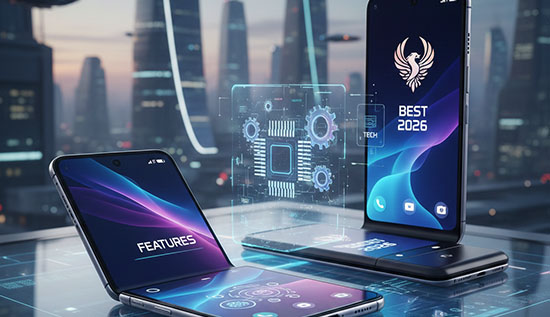
The best foldable smartphones 2026 offer flexible designs, multitasking capabilities and unique advantages for professionals and entertainment users.
In the past few years, new technologies have changed the mobile industry. One trend that has gotten a lot of attention is the rise of folding smartphones. These new gadgets were once thought to be experimental or futuristic, but they have quickly become useful tools for work, play and conversation in everyday life. As we approach 2026, the evolution of flexible smartphones signals a major shift in how users interact with mobile technology.
The shape of most traditional smartphones hasn't changed much in more than ten years. Even though performance, cameras and apps have kept getting better, smartphones have stayed mostly the same in terms of how they look until foldable devices came along. New kinds of devices have been made that are able to do both the useful things of tablets and the flexibility of smartphones. The hinges and flexible displays on these gadgets are very advanced.
Consumers are showing a lot of interest in and trust in this type of technology by buying more flexible phones. Multitasking, immersive displays and high-end design experiences that fit current digital lifestyles are drawing more and more users also. At the core of this evolution is foldable smartphone technology, which lets screens bend over and over again without losing their visual quality or longevity.
Many early worries about reliability have been put to rest by improvements in ultra-thin glass flexible OLED screens and hinge mechanisms. This has made foldable devices more useful for daily use.
In 2026, foldable phones are no longer niche items for early adopters; they are now becoming real competitors to flagship smartphones. More brands competing better software optimization, and easier to grasp price strategies are making foldable devices more appealing to professionals, publishers and regular users.
Discussions around foldable phone technology explained and how foldable smartphones work are becoming more common as consumers seek to understand the engineering behind these innovative designs.
The article talks about all aspects of foldable smartphones, including their main features, recent technological advances, practical benefits, market trends and the best foldable smartphones 2026 currently available also. If you are exploring the advantages of foldable phones will help you understand why folding phones are a big step forward in the growth of cell phones, if you want to be more productive or are just keen on the latest models of phones.
Foldable Smartphone Technology Explained: How Foldable Smartphones Work
Understanding foldable phone technology explained needs looking at the big steps forward in engineering that make it possible for screens to bend while still being strong and doing a good job. Technology that can change shape is made possible by high-tech materials, precise hinge engineering and smart software optimization. This is the new idea behind how folding smartphones work.
Modern technology is one of the most important things that flexible smartphone is the flexible OLED display. Foldable screens, on the other hand are made of very thin, flexible layers that are meant to bend many times without breaking. Ultra-thin glass and protective polymer layers are often used in these displays. This makes the screen sturdy while still displaying bright colors and clear images. The technology makes sure that users can see clearly whether the device is open all the way or folded up.
Another essential part of foldable smartphone technology is the hinge system. Early versions of foldable bikes didn't last long, but newer ones are much better. Modern hinges use multi-axis systems that make folding smoother and less likely to leave creases. A lot of money has been put into making hinges last longer so that gadgets can be folded hundreds of thousands of times and still stay stable.
Software also plays a critical role in how foldable smartphones work. Now, operating systems can change layouts more quickly based on where the gadget is put down. When it's folded, the phone works like a normal smartphone. But when it's opened, the screen is bigger, like a tablet. Features like split-screen multitasking and the ability to change the size of apps let users get the most out of the bigger screen.
How a Foldable Phone Functions
A good way to get a feel for how folding smartphones work is to break the process down into easy steps that do one thing. Modern mobile smartphones may seem to have a lot of complicated technology behind them, but they actually work because flexible hardware, precise engineering, and smart software systems all work jointly.
Many parts of the device work together to keep it durable, change the interface and provide a smooth experience every time the user folds or opens it. Every part, from the hinge motor to the flexible software design, makes sure that users are able to shift between small and large modes without issues. The steps that follow will show you the main process that makes current mobile devices work well in real life.
- The hinge lets you open and close the screen without putting too much stress on the layers. Modern hinges are made with precise engineering that spreads pressure equally. This keeps the screen from getting creases over time and reduces long-term wear.
- The flexible OLED layers bend easily while still being able to sense touch and see clearly. These layers include very thin glass and protective coatings that help keep the device from getting damaged and make sure that the colors, brightness, and responsiveness stay the same whether it is opened or closed.
- Sensors inside the device constantly check its angle and position. In this way, the system can tell if the phone is fully closed, partly folded, or open all the way. Software changes the interface, screen position, and app layout on the fly based on this information to make the user experience smooth.
- Software tuning makes sure that apps work well on screens of all sizes. For instance, when you open the device, apps instantly expand to make the most of the bigger screen, which lets you do more than one thing at once with features like split-screen viewing or floating windows.
- Power management tools make sure that both the inside and outside displays use the same amount of power. This helps the battery last longer by only turning on the screens that are needed and changing the frame rates based on how the device is being used.
- Advanced cooling and hardware coordination maintain performance even during multitasking. Because foldable smartphones often support running multiple apps simultaneously, internal components are optimized to manage heat and processing demands efficiently.
Real-Life Use Examples
A businessperson could unfold the device to work on papers and a video call at the same time, which would increase productivity without the need for extra devices. The bigger screen lets users look over presentations, answer emails and work together in real time, which makes folding smartphones great for working from home and being productive on the go.
Another example is people who make material and people who use social media. They can partially fold the phone to make it stable while holding it without using their hands. This makes it easier to record videos, livestream or take pictures without a stand. This adaptability shows the useful benefits of foldable phone technology, demonstrating how hardware design directly enhances usefulness in the real world.
Foldable Phone Features and Advantages: Why Users Choose Foldable Smartphones
As the category continues to evolve, manufacturers have refined foldable phone features to deliver real-world value instead of just futuristic design. In the beginning, foldable devices were interesting mostly because of their unique shape. But now, modern foldable smartphones have useful features that make work, play and creative easier.
Understanding the advantages of foldable phones helps explain why more users are transitioning from traditional devices to this new generation of mobile technology.
One of the most appealing aspects of foldable smartphones is the ability to combine a large display with a compact design. Like a regular smartphone the device is small and easy to carry when it is folded up.
When it is unfolded, however users can see a bigger screen that makes reading, gaming, browsing, and watching videos better. This dual functionality means you don't have to carry around both a smartphone and a tablet, which makes it great for professionals and people who move a lot.
Another major benefit comes from multitasking capabilities. An increasing number of new foldable phones can run multiple apps at the same time, which lets users divide the screen into various work areas. People who want to get things done will find this feature very useful. They can check their emails while reading papers or take notes during virtual meetings.
Better software efficiency makes sure that apps resize automatically when the device is opened or closed. This shows how foldable smartphone technology makes everyday tasks easier.
The development of new cameras is another area where folding designs stand out. Users can take pictures and videos in creative ways that aren't possible with regular smartphones because they have flexible shapes.
For instance, users can take high-quality selfies with the main camera by seeing a sample of themselves on the outside screen. Flex-mode positioning lets you record videos without using your hands, which is great for content makers, vloggers or social media users who want steady shots without needing extra gear.
Durability has also improved significantly compared to early models. Modern devices, including popular Samsung foldable phones, now have stronger hinges, better screen protection and designs that won't get damaged by water. These improvements put to rest earlier worries about dependability and make foldables better for everyday use.
Uses in real life show why these gadgets are becoming more and more popular. It's more efficient for businesspeople to work from home when they can unfold their phones to look at spreadsheets while on video talks. Also, people who make content can edit in larger spaces and move their devices around more easily as the screen works like a stand.
Users should think about things like the design type (clamshell vs. book-style), the durability of the hinges the ability to do more than one thing at once, the camera's flexibility and the battery life when picking one of the best foldable phones. To make sure the chosen device fits your wants and how you normally use it, think about these things.
Overall, the advantages of foldable phones extend far beyond aesthetics. With improved performance, innovative design and enhanced functionality, best foldable smartphones 2026 demonstrate how this category is transforming mobile technology by offering flexibility, productivity and immersive experiences in a single device.
Foldable Phone Market Trends and Best Foldable Smartphones 2026
The rapid expansion of the bold foldable phone market proves that flexible electronics are becoming more popular. Better manufacturing and more competition between brands are bringing down prices and giving people more choices.
1. Market Growth Trends: Key drivers behind market growth include:
Increasing flexible OLED production reducing costs, growing app ecosystem optimized for foldables, rising demand for premium multifunctional devices, asia-Pacific currently dominates production, with Samsung holding a significant share of shipments also.
2. Best Foldable Smartphones 2026: While new models continue to launch, several devices stand out among the bold best foldable smartphones 2026: Samsung Galaxy Z Fold Series, Among the most popular bold Samsung foldable phones, the Z Fold lineup offers:
- Large inner display with high refresh rates, Advanced multitasking features, Durable hinge design and improved brightness, Samsung Galaxy Z Flip Series, Clamshell-style foldables that prioritize portability and style while maintaining powerful performance.
3. Google Pixel Fold Series: Known for AI-driven software and refined design, offering a strong alternative in the bold best foldable phones category.
4. Xiaomi Mix Fold: Focuses on large displays and strong hardware specifications, appealing to productivity-focused users.
5. Emerging Innovations: Recent announcements include tri-fold concepts with even larger screens, showing how manufacturers continue pushing design boundaries.
Step-by-Step Guide: Selecting the Best Foldable Phone
- Figure out the main use for work or for entertainment.
- Compare the dimensions of the screens when they are spread out.
- Look at the computer software industry.
- Think about the width and amount of weight.
- Look over benchmarks for battery capacity and speed.
As innovation accelerates, the bold foldable phone market is projected to grow into more affordable price ranges, going beyond the high-end segments.
Conclusion
The rapid evolution of bold foldable smartphones represents one of the most exciting transformations in modern mobile technology. From rough versions used for testing to highly polished consumer goods, foldables have grown into useful tools that can change the way we work, play and talk to each other.
Today’s bold flexible smartphones show how new tech, like flexible hinges, ultra-thin glass, and software that can adapt to different users' needs can completely change how people use their devices. Compared to regular smartphones, being able to switch between small and expanded screen modes gives you more options.
The growth trajectory of the bold foldable phone market shows that adoption will keep speeding up. Prices are going down because factories are becoming more efficient and there is more competition. This means that foldable gadgets are becoming easier for most people to use. But new features like tri-fold designs, AI-powered ones and better sturdiness show that the category is still in its early stages of development.
Looking ahead, future developments in bold foldable smartphone technology it could have displays that can be rolled up, gadgets that are even thinner and better battery integration. It's possible that software ecosystems will become better at supporting foldable layouts, which will make them even easier to use.
Ultimately, bold foldable smartphones are not just a trend they show that mobile computing is going in a new way. Foldable smartphones will soon be as common as regular smartphones, as technology improves and prices drop. They will give users the flexibility, performance and new ideas they need for the next generation of digital lifestyles.
Read More: Online Jobs Using Mobile Phone Without Investment
More Articles
 29 Apr 2026
How to Use Proxy in Cambodia (Step-by-Step Setup Guide)
Learn how to use proxy in Cambodia with this complete step-by-step guide. Discover setup methods for Android, iPhone, free proxy options, and safety tips for 2026.
 29 Apr 2026
Is Public WiFi Safe to Use? How to Stay Protected
Is public WiFi safe in 2026? Key risks, hacker tactics, and simple ways to protect personal data on public networks.
 29 Apr 2026
How to Build AI Agents Without Coding | No-Code AI Tools
Stop waiting for developers. See how to build AI agents without coding to handle emails, research, and data tasks. Perfect for total beginners.
 28 Apr 2026
WiFi Speed Optimization Tips for Faster Internet
Discover practical WiFi speed optimization tips to improve internet performance, fix slow connections, and enhance signal strength at home.