TinyML in Smart Home Devices: AI, IoT & Edge Automation
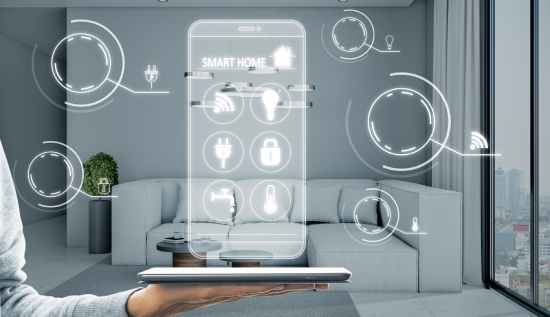
TinyML in smart home devices is transforming AI-powered smart home devices with faster processing, improved privacy, and energy-efficient AI for IoT at the edge.
It is no longer the case that the modern home, is merely a physical area that is stuffed with furniture and appliances. The environment is evolving into one that is responsive and intelligent, driven by artificial intelligence and technology that are connected to one another. Voice assistants, smart thermostats, security cameras and intelligent lighting systems are just some of the examples of how AI-powered smart home devices are already revolutionizing the way people live, work, and interact with their surroundings.
TinyML in smart home devices is a breakthrough concept that could be considered the driving force behind this transition. TinyML which is an abbreviation for "Tiny Machine Learning," transfers the capabilities of machine learning directly to low-power hardware components that are small in size. Smart gadgets are now able to think, learn and act locally, as opposed to relying entirely on cloud-based processing.
In this article, we will discuss what is TinyML in smart homes, how it operates, how it differs from typical machine learning, and why it is becoming increasingly important for the smart home automation with TinyML. The role of IoT device intelligence, edge computing for smart home, and the growing requirement for energy-efficient AI for IoT will also be investigated.
What Is TinyML in Smart Homes?
It is necessary to first dissect the concept in order to comprehend what is TinyML in smart homes. TinyML is a term that describes the process of deploying machine learning models on microcontrollers and embedded devices that have extremely low processing capacity, memory, and energy consumption. When it comes to memory, these devices often only have a few kilobytes or megabytes, and they are powered by batteries.
When it comes to standard smart home systems, the data that is gathered from sensors, such as measurements of temperature, motion detection, or audio signals, is transmitted to cloud servers for processing. The cloud does an analysis on the data and then transmits instructions back. While this method is effective, it does create latency, it increases the amount of bandwidth that is used, and it raises concerns about privacy.
Processing is carried out directly on the TinyML in smart home devices is utilized in smart home devices. A smart doorbell is able to identify a person you know in the immediate area. A thermostat is able to learn personal preferences regarding temperature without having to constantly communicate with the cloud. Localized intelligence is fueled by compact machine learning models that have been designed for the utilization of the fewest resources possible.
TinyML decreases reliance on remote servers while simultaneously improving responsiveness and privacy. This is accomplished by enabling IoT device intelligence at the hardware level.
The Rise of AI-Powered Smart Home Devices
AI-powered smart home devices, are experiencing a surge in demand. More rapid replies, more individualized experiences and enhanced energy management, are all things that customers anticipate. Nowadays, smart devices like smart speakers, smart locks and smart lighting systems are not merely passive tools; rather, they actively study the behavior of their users and adjust themselves accordingly.
However, traditional AI systems that are hosted in the cloud have some restrictions. It is necessary to maintain constant connectivity and any disruption to the network can have an effect on performance. Further, sending a substantial volume of data to the cloud can be a costly endeavor and can also raise concerns regarding the safety of the data.
The use of edge computing for smart home is something that is really important in this regard. Processing data, close to its origin, as opposed to transmitting it to data centers located further away is what is meant by the term "edge computing." This move, is made possible in large part by TinyML. The use of TinyML in smart home devices, improves dependability and decreases reliance on external infrastructure. This is accomplished by directly embedding lightweight artificial intelligence models into such devices.
With more manufacturers adopting energy-efficient AI for Internet of Things, smart homes are becoming more autonomous, faster and safer.
How TinyML Improves Smart Home Devices
Examining real-world examples, is necessary in order to comprehend, how TinyML improves smart home devices. Think about installing a smart security camera. The process of object detection, is carried out by streaming video footage to a distant server in a cloud-based application. Because of this, bandwidth is consumed and delays may be introduced.
Using TinyML in smart home devices, the camera is able to detect motion, recognize human shapes and differentiate between pets and intruders right on the device itself. Only warnings that are pertinent to the situation are delivered to the cloud or the smartphone of the homeowner. This results in increased efficiency, and a reduction in the transmission of superfluous data.
The use of voice recognition is yet another example. Cloud processing, is frequently utilized by intelligent assistants in order to interpret voice requests. The integration of TinyML allows for the detection of wake-words, and the recognition of basic commands to take place locally. The fact that sensitive audio data does not always leave the home network increases the level of privacy that this strategy provides.
In a nutshell, the enhancements that how TinyML improves smart-home devices may be broken down into three primary categories:
- Faster response times
- Reduced bandwidth usage
- Enhanced data privacy
These enhancements directly contribute to the development of smart home automation with TinyML that is both more intelligent and more reliable.
Edge Computing for Smart Home Environments
TinyML lends itself exceptionally well to the idea of edge-computing for smart home systems. Rather than transmitting each, and every sensor reading to centralized servers, edge devices do information analysis locally locally.
A smart thermostat, for instance, is able to learn patterns of occupancy and automatically modify the temperature of the heating or cooling system. Through this process of localized learning, the IoT device intelligence is strengthened which enables objects to make decisions on their own.
The integration of TinyML in smart-home devices and edge computing architecture provides homeowners with the opportunity to take advantage of automation that is nearly instantaneous. It is possible for lights to turn on quickly upon the detection of motion. It is possible for security alarms to activate immediately. The consumption of energy can be optimized in real time by appliances.
Further, the utilization of edge computing for smart home results in a substantial reduction in operational expenses. A reduction in cloud communication results in a reduction in the costs of data storage and processing. As a result, the technology behind smart homes becomes more scalable and affordable.
Energy-Efficient AI for IoT
A emphasis on energy-efficient AI for Internet of Things, is one of the most attractive features of TinyML. There is a large amount of energy consumption and a requirement for powerful processors in traditional AI models. It is not feasible to do so for smart home gadgets, that are small and powered by batteries.
TinyML models are designed to operate on microcontrollers while consuming the least amount of energy possible. The longer battery life and more sustainable operation of the device, are both ensured by this. In the energy-efficient AI for IoT becomes increasingly more crucial as the number of connected devices in homes continues to rise.
For instance, smart sensors that are installed in doors and windows can continue to function for a period of months, or even years without the need for a replacement battery. Due to the fact that TinyML in smart-home devices minimizes the amount of computing burden and eliminates the need for continuous cloud connectivity, this is accomplished.
In addition to promoting environmental sustainability, the transition toward energy-efficient AI for Internet of Things, also enhances consumer convenience.
Benefits of TinyML for IoT
The benefits of TinyML for IoT, go much beyond the reduction of energy consumption. Distributed intelligence is becoming increasingly necessary as Internet of Things ecosystems continue to expand.
Key advantages include:
- Real-time decision-making
- Enhanced privacy protection
- Reduced latency
- Lower operational costs
- Improved reliability during network outages
When manufacturers include TinyML in smart home device, they are able to design systems that are capable of operating independently. Scalability, is another benefits of TinyML for IoT. A smart home network that uses local processing eliminates the possibility of bottlenecks that could arise in centralized cloud-based systems as more devices are added to the network.
In addition, the Internet of Things device intelligence progressively becomes more advanced over time. Without requiring significant infrastructure modifications, devices are able to continuously adapt to the behavior of users.
TinyML vs Traditional ML for Smart Devices
The contrast of TinyML vs traditional ML for smart devices, is an important one to investigate. Cloud-based servers and strong graphics processing units (GPUs), are often required for traditional machine learning. It works exceptionally well for large-scale data analysis, but it is not as well suited for real-time applications, that require little power.
TinyML vs traditional ML for smart devices, calling attention to the benefits of lightweight, embedded models. The TinyML project focuses on developing small neural networks that are designed to function within the constraints of specific hardware.
Here are the primary differences:
- Traditional ML requires high computing power; TinyML runs on microcontrollers.
- Traditional ML depends, heavily on cloud connectivity; TinyML in smart home devices, operates locally.
- Traditional ML consumes significant energy; TinyML supports energy-efficient AI for IoT.
After contrasting TinyML versus traditional ML for smart devices, it is evident that TinyML is not a substitute but rather an approach that complements the previous method. Cloud artificial intelligence continues to be useful for complicated analytics while TinyML ensures that edge automation, is responsive and real-time.
Smart Home Automation with TinyML
The future of smart home automation with TinyML rests in the creation of living areas, that, are completely self-sufficient. Picture a house that is able to anticipate your requirements based on the patterns of behavior, that you have learned.
The lights will automatically adjust themselves in accordance with your everyday schedule. Systems of security are able to identify between members of the family and strangers. Depending on the amounts of people using them, appliances can optimize their energy consumption.
A proactive rather than a reactive approach to automation, is achieved through the incorporation of TinyML in smart home device. Devices, no longer wait for orders from the cloud; instead, they immediately assess and take action.
Additionally, smart-home automation with TinyML, makes customisation more effective. Models of machine learning, can be adapted to the specific needs of particular homes without revealing data obtained from outside sources. When this occurs, confidence is strengthened, and a larger adoption of AI-powered smart home devices, is encouraged.
IoT Device Intelligence and Data Privacy
Concerns about privacy, are growing as the level of intelligence in smart homes increases. Concerns have been raised by customers over the storage of personal information, voice recordings, and camera images on cloud servers.
TinyML's ability to improve the IoT device intelligence, is a solution to these challenges. By processing data locally, devices reduce the amount of data that is transmitted externally. The home network is the only place where sensitive information is stored.
This is one of the most important benefits of TinyML for IoT. However, devices only transmit insights, or alerts when it is absolutely required to do so, rather than sending raw data to the cloud. In line with the increasing demands of both regulators and consumers for improved data protection, this strategy is appropriate.
Increasing the level of sophistication of TinyML in smart home device, will result in smart environments that are both more secure and operating independently.
Challenges and Considerations
The use of TinyML in smart home devices, is not without its problems, despite the fact that it has many benefits. It is necessary for developers to create models, that are highly efficient and can be accommodated within memory restrictions. A meticulous planning process, is also required for updating firmware and ensuring hardware compatibility.
In addition, it is vital to incorporate cloud support into edge-computing for smart home. Cloud infrastructure continues, to be useful for model training and large-scale data analytics, despite the fact that local processing provides quicker processing times, and greater privacy.
Cost, complexity and scalability are three factors, that enterprises, need to take into consideration when comparing TinyML versus traditional ML for smart devices. Hybrid strategies frequently produce the most favorable outcomes.
The Future of TinyML in Smart Homes
The number of AI powered smart home devices is increasing at a rapid pace across the globe. The incorporation of energy-efficient AI for Internet of Things will become normal practice as technology gets more budget-friendly and efficient.
Adaptive energy management, enhanced speech recognition, gesture detection and predictive maintenance are some of the prospective applications of TinyML in smart home device. Homes will become increasingly self-sufficient, relying on intelligence, that is built within them to run day-to-day operations in a seamless manner.
In addition, the development of Internet of Things device intelligence will make it possible for gadgets to work together. As an illustration, smart home automation with TinyML enables motion sensors, thermostats and lighting systems to communicate with one another on a local level, hence boosting the automation of smart homes.
With the progression of innovation, it will become increasingly important for consumers, developers, and manufacturers alike to have a solid understanding of what is TinyML in smart home.
Conclusion
The revolution of the smart home is starting to enter a new phase which will be characterized by real-time responsiveness and intelligence that is localized. Through the incorporation of machine learning directly into low-power hardware, TinyML in smart home devices is revolutionizing the way linked systems function from a functional standpoint.
TinyML is able to improve performance, reinforce privacy and minimize latency in edge computing for smart home. The transition toward AI that, is more energy-efficient AI for Internet of Things assures both long-term scalability and sustainability.
When comparing TinyML versus traditional ML for smart devices, it becomes abundantly evident that TinyML makes a significant contribution to the enhancement of intelligent edge automation. The multiple benefits of TinyML for Internet of Things which range from increased productivity to heightened safety, establish it as a basic technology for the future.
In the end, gaining a grasp of how TinyML improves smart home devices and embracing smart-home automation with TinyML will influence the next generation of living spaces, which will be smarter, safer and more responsive than ever before.
Read More: What Does a Smart Contract Developer Do? Explained
More Articles
 24 Jul 2026
Browser Security Tips: How to Browse the Web Safely
Learn the best browser security tips to protect your privacy, block cyber threats, and enjoy secure web browsing. Discover how to make your browser more secure and browse the internet safely.
 22 Jul 2026
Passkeys vs Passwords: Security Comparison
Discover how passkeys compare to traditional passwords, learn how passwordless authentication works, and find out which option offers better security for protecting your online accounts.
 17 Jul 2026
Rust vs Go: Which Language Is Better in 2026?
Compare Rust vs Go in 2026, including performance, backend development, memory safety and the best language for your projects.
 15 Jul 2026
What Is Synthetic Data? Benefits, Uses & Examples
Understand synthetic data explained, its benefits and real-world AI examples that improve privacy and machine learning.