Time-Tracking and Task Management Software for Teams
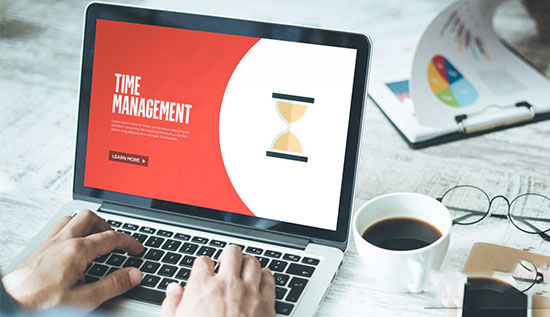
Time-tracking and task management software helps teams improve productivity and manage time with accuracy.
Teams are always under pressure to get things done faster, smarter and more openly in today's fast-paced, mixed and remote-first workplaces. This is where software for keeping track of time and tasks becomes an important part of modern teamwork.
Companies no longer use spreadsheets, email threads or handwritten status updates to keep track of progress, divide up resources and correctly measure productivity also. Instead, they use smart digital systems. When implemented correctly, software for keeping track of time and tasks aligns daily tasks with business goals, cuts down on wasted work and makes groups more accountable to each other.
As a business grows, it becomes more complicated. With many projects, overlapping dates, and spread-out teams, it's easy to miss tasks, give wrong estimates of how much work needs to be done and get burned out.
By combining task management tools with advanced time-tracking apps, teams can see at any time who is working on what, how long tasks really take, and where changes need to be made. This approach based on data takes away the need for guesswork and gives leaders the tools they need to make better operational choices.
Another major advantage of time-tracking and task management software is its impact on collaboration and focus. When jobs are clearly defined, ranked and kept track of, workers spend less time looking for information and more time doing work that matters.
Integrated productivity management software helps with setting goals, analyzing success and always getting better. Time-tracking software for remote work makes sure that everyone is treated fairly, that everything is clear and that people trust each other by focusing on results instead of constant control.
Businesses of all sizes are starting to understand that working better, not longer, is the key to being more productive. With unified project management and time tracking, teams can plan better, deliver faster, how to manage tasks and track time efficiently and maintain a healthier work‑life balance.
This article explores how time-tracking and task management software works, why it's important and how teams can use it to be more productive, responsible and successful in the long run.
Understanding Time-Tracking and Task Management Software
software for keeping track of time and tasks is designed to centralize how teams plan, execute, and measure work. As its fundamental component, it combines software for organizing structured tasks with software that automatically tracks time.
This enables teams maintain records of work at the assignment, project and employee stages. These platforms do not function like simple to-do lists because they have dashboards, reports and integrations that create information from everyday operations that can be readily used.
Modern task management tools allow managers to break down complex projects into smaller, manageable tasks with clear owners, deadlines and priorities. When paired with time-tracking apps, teams can accurately keep updated records of how long each job takes to complete, discover problems and make plans for how to do things better. With this combination of factors, productivity goes beyond being an abstract concept to a success measurement that can be measured.
Key Features of Software for Keeping Track of Time and Tasks
Common features found in software for keeping track of time and tasks include:
- Making assignments, assigning them and setting priorities
- Tracking time additionally automatically and through the hand
- Schedules for projects and a graphic representation of the assignment
- Dashboards which demonstrate advancement in real time
- Information on accomplishments and outcomes
- Payroll, accounting and communication instruments are all capable of being connected
These features make employee time management software, this is especially helpful for businesses which charge clients by the hour, handle many jobs simultaneously or work with teams that work from home. By combining time tracking along with project management, leadership can see how resources are being utilized and how healthy the project is in general.
Step-by-Step Guide: Setting Up Effective Time and Task Tracking
- Define project goals and deliverables clearly.
- Break projects into structured tasks using task organization software.
- Assign owners and deadlines within your task management tools.
- Enable time tracking for each task using time-tracking apps.
- Review reports weekly to optimize workflows and workloads.
Use Case Example 1: Marketing Team Optimization
A digital marketing agency managing campaigns across multiple clients adopted time-tracking and task management software to improve delivery timelines. By looking at time data, they found that too many hours were spent on corrections. Using information from software for managing production, they streamlined the authorization process and within three months they were earning more money.
Benefits of Time-Tracking and Task Management Software for Teams
The benefits of time-tracking and task management software go far beyond just keeping an eye on things or keeping track of time. For practical efficiency and accountability, it's a powerful tool and long-term, sustainable growth when used in a strategic way. One benefit that can be seen right away is that teams and projects are more open with each other.
Real-time updates and centralized dashboards let everyone from team members to leadership, see right away the state, ownership and progress of each job. Because everyone can see what's going on, meetings, progress checks and follow-up emails that take a lot of time aren't needed as often.
Another major benefit is improved alignment between individual efforts and organizational goals. By using integrated task management tools, teams can easily see what needs to be done, when, and how it all fits together.
This level of clarity cuts down on confusion, stops work from being done twice and makes sure that no important job gets missed also. When paired with task management apps to boost productivity, instead of juggling multiple platforms that are unsuccessful together or unclear recommendations, employees are able to concentrate on high-impact employment.
At the same time, employee time management software enables fair, performance review based on facts. Managers can figure out how productive people are without having to rely on guesses or personal observations. Instead, they can use data on real work patterns, time allocation and task completion to do so.
Not only does this make things more open and trustworthy, but it also helps find skill gaps, training needs and ways to make the process better without micromanaging.
Productivity and Performance Improvements
By leveraging modern time-tracking apps, teams get useful information about how time is really spent on different jobs and projects. With these insights, businesses can move from fixing problems after they happen to optimizing things before, they happen. In particular, teams can:
- Discover jobs that take an extensive amount of time or aren't very important that slow you down.
- Minimize down on things that aren't useful and on switching between contexts often enough.
- Balance the team's collective ability across members to better distribute work.
- Use past success data to improve the accuracy of forecasting for the future.
Managers can use project management and time tracking reports for creating more accurate timeline predictions, set reasonable goals and strategically allocate resources. This way of making decisions based on data helps teams be more productive without making people more stressed or burned out. This creates a better and more sustainable workplace.
Step-by-Step Guide: Improving Team Productivity
- Analyze time data collected from time-tracking software for remote work to understand current work patterns.
- Find inefficiencies, recurring delays and assignments that always take longer compared with expected.
- Reassign or reprioritize tasks using task management tools based on individual capacity and skill sets.
- Set realistic timelines supported by historical data rather than assumptions.
- Continuously refine workflows using insights from productivity management software to drive ongoing improvement.
Use Case Example 2: Remote Software Development Team
A fully distributed software development team struggled with frequent deadline overruns and unclear task ownership. After implementing software for keeping track of time and tasks, their companies saw all of the task relationships, sprint workloads and estimated effort levels.
Analyzing data from time-tracking apps helped project managers discover slow spots in the testing and code reviews procedures. Utilizing project administration apps to increase output also, the team reorganized sprint planning, more evenly distributed workloads, and enhanced collaboration and coordination, eventually reducing delivery delays by 25% within two quarters.
Choosing the Best Time-Tracking and Task Management Software for Teams
Selecting the best time-tracking and task management software for teams requires a strategic, well-informed evaluation of organizational goals, team size and daily workflows. While many platforms claim to be all-in-one solutions, not all task management tools are designed to support real-world team dynamics.
If you pick an inappropriate method, you might not get numerous users, attract bad data, have disgruntled employees and consume resources in the grand scheme of things which explains why people who make decisions need to look deeper compared with the solution's surface features and see how effectively it corresponds with their long-range objectives for efficiency and development.
A strong software for keeping track of time and tasks platform should feel intuitive from day one while still offering advanced capabilities as teams mature. Usability is especially critical because even the most powerful productivity management software failures in the event workers don't want to engage with it consistently.
Without a lot of conditioning, teams are supposed to be able to set ambitious objectives, monitor the passage of their time, and look over their progress. Adoption rates across geographical regions are much higher when accompanied by clean interfaces, accessibility via mobile devices, and easily understood dashboards.
Another crucial factor is reporting depth. High-quality employee time management software Should transmute ordinary time data into suggestions that make sense. It's important for managers to have an understanding how long assignments really take, where projects lose momentum, as well as how work is divided up.
Additional properties detailed reports are beneficial for planning ahead, making budgets, and enhancing performance. For service-based companies, efficient billing and keeping accountable for billable hours are necessary for performance project management and time tracking.
For distributed and hybrid teams, time-tracking software for remote work plays an even more vital role. Accuracy is ensured by automatic time capture, idle recognition and disconnected tracking, among other features which don't require any intrusive monitoring.
These features help teams stay responsible across different time zones while still being equipped to trust another person and be considered flexible. At the same time, the ability to integrate is important time-tracking and task management software to connect seamlessly with communication platforms, accounting systems and HR tools, creating a unified digital ecosystem.
Scalability should never be overlooked. As organizations grow, their task organization software must be able to handle greater numbers of clients, projects, and complicated reports without slowing the system down. It's easier for businesses to expand without the necessity of switching platforms later on when pricing arrangements are adaptable, the permissions are contingent on classifications, and the workflows can be modified changed.
Evaluation Checklist
When comparing software for keeping track of time and tasks, consider:
- Easy functioning for everyone in every position throughout the week
- Possibilities for making workflows and assignment views your very own
- Reporting and analytics complexity to make choices according to statistics
- Integration with procedures and instruments that are already in implemented
- Standards for safety, confidentiality, and following the regulations
Evaluating these factors helps teams identify the best time-tracking and task management software for teams which happens useful and has value in decades to come.
Step-by-Step Guide: Software Selection Process
- Make it readily apparent what the team needs, how things function and where the problems are located.
- Shortlist platforms offering robust project management and time tracking.
- Put together a sample team to determine how well the system functions and how engaged people are alongside the process.
- Check at the information collection tools, how effectively they integrate and how scalable they have become.
- Spread it across every department in company with structured instruction along with straightforward instructions.
Conclusion
In an era where efficiency, flexibility and accountability define success, time-tracking and task management software has become an important tool for teams currently also. As workplaces become more complicated and distributed around the globe, businesses need dependable structures that make everyday operations more organized, straightforward and consistent.
By integrating structured task management tools with intelligent time-tracking apps, businesses acquire information about how work is planned, carried out and consequently cannot be found anywhere else. This transparency helps organizations of every kind make better plans, evaluate success objectively while continually improving too.
Whether managing in-office employees or global, distributed workforces, time-tracking software for remote work promotes stability and openness without encouraging micromanagement also. Instead of constantly supervising, managers can use information-driven conclusions for looking at results, change workloads, while preventing employees from becoming burned dismissed.
When paired with advanced productivity management software, long-term business goals can be aligned with everyday responsibilities by teams, making confident that each person's work directly contributes to the success of the company.
Beyond efficiency gains, software for keeping track of time and tasks also plays a critical role in building trust and accountability. Employees can understand that which is expected of them and track their own progress with the help of unambiguous assignment ownership, reasonable deadlines, and accurate time data.
Over time, this consistency leads to better communication, greater collaboration and more participation. Teams take more initiative; managers make smarter decision-making also and companies build a culture based on openness and constant growth.
Ultimately, investing in the best time-tracking and task management software for teams is not simply about monitoring hours or checking off tasks also. This is about encouraging smarter work habits, boosting long-term output and giving teams the information that they require to do their most effective work.
In today's increasingly competitive and rapidly changing business world, teams are significantly more likely to achieve outstanding results when they know what their priorities include, maintain accurate records of their achievements and make use of data to improve the way they operate.
Read More: Hiring Real-Time Messaging and Delivery Expert Today
More Articles
 26 Jan 2026
Top Renewable Technologies for Sustainable Data Centers
Renewable technology in data centers is transforming digital infrastructure through solar, wind, and energy-efficient systems that support sustainable and green operations.
 24 Jan 2026
Industry 4.0 Trends: Top Technologies & Business Impact 2026
Industry 4.0 trends shaping 2026, covering smart factories and real business impact across industries.
 24 Jan 2026
AI in Recruitment 2026: Trends, Tools & Benefits
Discover how AI in recruitment 2026 will reshape hiring, tools, and talent strategies for modern HR teams worldwide.
 23 Jan 2026
Different Types of Malware Explained with Examples (2026)
Updated 2026 overview of different types of malware explained with examples, including ransomware, spyware, botnets, and modern attack methods.