Cloud Storage vs Physical Storage: Which Is the Best Option?
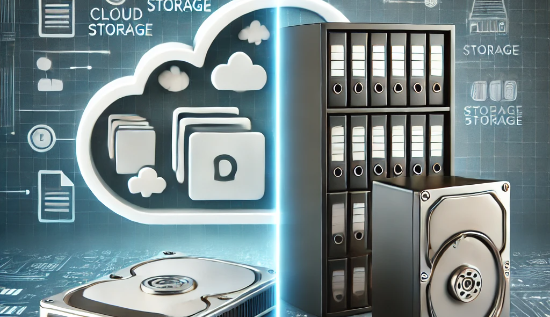
Discover the pros and cons of cloud storage vs physical storage and find the best storage options for businesses today.
The argument between cloud storage vs physical storage becomes more relevant as companies depend more on digital data. Business data storage solutions that fit their operational requirements, security issues, and cost-effectiveness must be selected by companies between
Understanding the advantages and drawbacks of each method is essential for selecting the best storage options for businesses.
Understanding Cloud Storage Vs Physical Storage

Defining cloud storage vs physical storage is absolutely vital before deciding what to do. For companies, cloud storage for business is putting data on off-site servers run by a third-party supplier under simple online access. Physical storage, on the other hand, entails local servers, hard disks, or other tangible equipment housed on the grounds of an entity.
Cloud Storage for Businesses: A Modern Solution
With the rise of cloud technology, cloud storage for businesses has become a dominant option. It offers remote accessibility, scalability, and cost efficiency.
- Unlike conventional storage, which calls for more hardware purchases, cloud solutions can be grown as needed.
- Cost-effectiveness: Companies simply pay for the storage they consume, therefore avoiding initial outlay of funds.
- Accessibility: Workers may access files from anywhere to guarantee flawless process and remote cooperation.
- Many services include data backup and recovery as automatic backups, therefore lowering data loss risk.
However, there are cloud data security risks that businesses must consider. Unauthorized access, cyber threats, and data breaches are potential threats, but robust data encryption and security measures can mitigate these risks.
Physical Storage: A Traditional Approach
Even although the cloud is becoming more and more popular, companies needing direct control over their data still depend on physical storage. This choice calls for external hard drives, local servers, and other on-site storage options.
- Enhanced Security: Since data is stored onsite, businesses have complete control over access and security.
- Faster Data Retrieval: Unlike cloud storage, there are no internet speed limitations affecting data access.
- Compliance Requirements: Some industries require businesses to maintain secure data storage solutions that are physically controlled.
However, physical storage comes with limitations, such as high maintenance costs, risks of hardware failure, and vulnerability to physical damage from disasters like fires or floods. This is where data backup: cloud vs physical storage solutions come into play to ensure a robust storage plan.
Data Security: Cloud vs Physical Storage
Security is a major concern when evaluating cloud storage vs physical storage. Cloud storage for business relies on encryption, multi-factor authentication, and firewall protection. Leading providers prioritize data encryption and security to safeguard sensitive information.
Conversely, corporate cybersecurity policies, limited access, and physical storage guard physical storage. This reduces online hacking concerns, but it does not totally rule hardware failure or theft.
Data Backup and Recovery: Cloud vs Physical Storage
Efficient data backup and recovery strategies ensure that businesses can restore lost data without disruptions.
- Cloud-Based Recovery: With automatic backups and redundancy, cloud solutions allow businesses to recover files instantly, reducing downtime.
- Physical Recovery: Recovery from physical devices depends on backup frequency, requiring manual intervention to prevent permanent loss.
Companies must assess data recovery: cloud vs physical storage based on risk tolerance and operational needs.
Best Storage Options for Businesses: Which One to Choose?
Selecting the best storage options for businesses depends on several factors, including budget, security, and accessibility needs.
- Cloud Storage for Businesses: Ideal for companies prioritizing scalability, remote access, and minimal hardware maintenance.
- Physical Storage: Suitable for industries with strict data compliance needs or organizations that require on-premises control.
- Hybrid Solutions: Many businesses adopt a hybrid approach, combining cloud convenience with secure data storage solutions on physical drives.
Cost Considerations in Cloud vs Physical Storage
The financial aspect of storage solutions is a crucial factor in decision-making. Cloud storage for businesses usually has a subscription-based pricing structure whereby businesses pay for the used storage space. This does away with the necessity for costly maintenance expenses and hardware acquisitions. Ongoing subscription fees, though, can mount up over time.
Conversely, physical storage calls for a major initial outlay in servers, hard drives, and maintenance. Although initially expensive, this offers long-term ownership free of regular costs. Still, one has to take into account the costs connected to security precautions, power consumption, and possible hardware changes.
Performance and Efficiency in Storage Solutions
Accessibility and speed define how well business data storage options work. With cloud storage, staff members may access data from anywhere and work in real time cooperatively. For remote work settings specifically, this adaptability is quite important. On the other hand, depending too much on internet access could be a drawback since disturbed or poor connections might lower output.
In contrast, physical storage offers faster data access speeds for on-site employees. For sectors needing fast data processing, it is perfect since there is no reliance on outside servers. The drawback, though, is the lack of remote access, which reduces flexibility for companies employing mobile workers.
Conclusion
Choosing between cloud storage vs physical storage requires a careful evaluation of security, cost, and accessibility needs. Cloud storage for businesses provides flexibility and automatic backups, while physical storage ensures complete data control. For many businesses, a hybrid approach balancing both options offers the most effective business data storage solutions.
Frequently Asked Questions
1. Generally speaking, what distinguishes cloud storage from physical storage?
Whereas physical storage entails local equipment providing direct control and protection, cloud storage is internet-based and offers remote access and scalability.
2. Safer than physical storage is cloud storage?
Everyone has some hazards. Whereas physical storage is safe from hacking but subject to hardware damage, cloud storage faces cyber dangers but uses strong data encryption and protection.
3. For companies, which storage solution is best?
Businesses' best storage solutions rely on their needs: physical for protection, cloud storage for adaptability, or a hybrid for compromise.
4. How do companies approach cloud and physical storage data recovery: cloud vs physical storage?
While physical storage calls for hand backups, hence increasing data loss risk, data backup and recovery in cloud storage is automated.
5. Are companies able to employ both physical and cloud storage?
Indeed, a lot of businesses choose a hybrid approach, combining reliable and efficient safe data storage options.
6. Compared to physical storage, what expenses surround cloud computing?
While physical storage entails upfront investments and continuous maintenance costs, cloud storage usually follows a pay-as--you-go paradigm.
7. In what ways may cloud storage influence corporate processes?
Cloud storage guarantees data backup, remote access, and boosts cooperation; cloud rather than physical storage solutions provide better efficiency.
More Articles
 01 Apr 2026
Learn Coding for Beginners – Step-by-Step Tutorials
Step-by-step guide to coding for beginners with practical tutorials and essential resources to start coding in 2026 confidently.
 01 Apr 2026
E-Wallet Apps Cambodia – Wing, ABA & Mobile Payments
Get the best e-wallet apps Cambodia list. Use online payment apps Cambodia for daily needs and cashless payment apps for businesses Cambodia.
 31 Mar 2026
File Converter Tools Online – Convert PDF, Video, Audio
Explore file converter tools online to easily convert PDF, video, and audio files. Learn simple, free, and effective ways to manage file formats.
 28 Mar 2026
Google Classroom App & Tutorial for Students 2026
This Google Classroom tutorial covers the Google Classroom login and top Google Classroom tips and tricks 2026.