Agile vs Waterfall: Which Is Better for Projects?
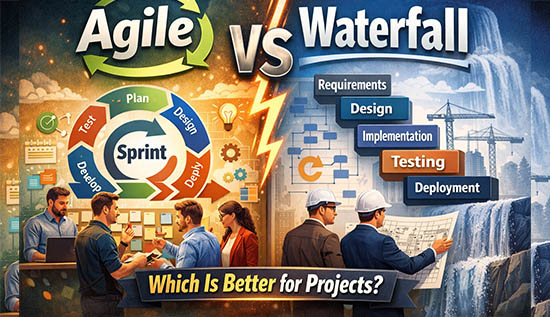
Analyze Agile vs Waterfall project management, including key differences and practical examples across industries.
The world of project management moves quickly and picking the right method can make or break a project. In software development and project development in general, Agile and Waterfall are two of the most popular models. Both methods aim to produce high-quality outcomes, but they are very different in how they are structured, how flexible they are and how they are used.
Understanding agile vs waterfall development is essential for project managers, software developers and business owners who want to make sure their teams use the method that fits their project's goals schedules and resources the best.
The debate around agile vs waterfall comparison often arises because businesses struggle to determine which approach will yield the best outcomes. As the name suggests, the waterfall method is linear and sequential, with a focus on careful planning, documentation and set steps.
Because each step has to be finished before moving on to the next, it works best for projects with clear requirements and few changes that are expected. Agile development, on the other hand, uses little steps and can be changed easily. What customers say, working together and always getting better are at the top of the list. Agile teams can adapt to new needs, which makes sure that the final result is very close to what users want.
Differences between Agile and Waterfall extend beyond process structure. They also affect how the team communicates, how risks are managed and how resources are used. For example, if requirements change in the middle of a Waterfall project, it could cause delays.
But Agile projects do well in changing environments because they can offer features in small steps. This makes the agile vs waterfall project management, this is a very important choice, because picking the wrong approach can waste money, cause projects to be late and make stakeholders angry.
In this article, we will explore the agile vs waterfall methodology in depth, including their pros and cons, key differences explained, practical examples in real projects and actionable guidance on how to choose between Agile and Waterfall for your organization. You'll know when to use agile vs waterfall development, which will help you finish your projects on time and give clients and end users the most value possible.
Understanding Agile vs Waterfall Development
Agile vs Waterfall development demonstrates two extremely distinct ways of handling project management.
1. Waterfall Methodology: Waterfall is a linear, sequential approach to finish each part of the job before moving on to the next. Typical stages are gathering requirements, designing, developing, testing, deploying and maintaining. With waterfall, there are clear goals, lots of documentation and set dates for when things will be done.
Key Features of Waterfall:
- Fixed duration and job description
- Comprehensive planning from the very beginning
- Very little to none client participation shortly after they expressed their needs
- Finalization throughout the sequential segment
2. Agile Methodology: Agile, by contrast, is iterative and incremental, putting the focus on being flexible and working together. Projects are broken up into short rounds called sprints that last between two and four weeks. Each sprint makes a possible shippable product update, and feedback from customers is always taken into account.
Key Features of Agile:
- Adaptable with the capacity to respond as circumstances accomplish
- Everyday comedy performances and working together as an entire group
- Delivery of tiny but useful components all throughout the day
- Concentrate on feedback from consumers and happiness
Agile vs Waterfall comparison highlights that Agile prioritizes responsiveness and iterative delivery, while Waterfall emphasizes predictability and structured planning. This distinction significantly influences agile vs waterfall project management strategies and outcomes.
Example Use Case:
Waterfall: A construction company contemplating constructing an additional office structure would benefit from Waterfall because every detail would have to be spelled toward at the beginning and making adjustments during the building process is expensive.
Agile: A software organization making an application for smartphones would benefit from Agile because it makes them use feedback from customers to improve functionality during each sprint.
Key Differences Between Agile and Waterfall
Understanding the agile vs waterfall differences explained is very important for picking the appropriate method for the task at hand. Both methods endeavor to get satisfactory outcomes, but they are substantially different regarding the way they work, how flexible they are with regard to how they plan and how that they work with organizations.
In Waterfall methodology, projects follow a linear and sequential structure. Each phase such as requirements gathering, design, development, testing, and deployment must be completed before the next phase begins. This approach relies heavily on extensive upfront planning, thorough paperwork and once the initial requirements have been determined, the consumer should not be involved significantly.
Waterfall is preferred for projects with established objectives and little room for modifications throughout the middle of the undertaking, because risks have been identified early and managed in an organized manner. Delivery doesn't happen as long as the end of the project, so stakeholders may not experience a working result until every one of the phases are accomplished.
In contrast, Agile methodology is iterative and incremental. Projects are divided into smaller cycles, often called sprints, with each sprint delivering a working product increment. Agile stresses flexibility, which lets teams make changes quickly based on changing needs or feedback from stakeholders.
Planning is flexible instead of set-in stone, and documentation is minimal, with a focus on the finished result rather than detailed reports. Agile also encourages teams to work together and share responsibility all the time, involving clients throughout the entire project process. Product release happens all the time, so stakeholders can see what's going on early on and make changes as needed.
Example in Real Projects:
Waterfall: subsequently might be prohibitively expensive or impossible to establish a regulatory compliance system where every regulation is officially established and changes are implemented in the latter stages of an undertaking.
Agile: Starting upward an e-commerce site in which changing user inclinations and marketplace developments mean that it includes and changes need be readily available made frequently.
By understanding these distinctions, teams can make informed decisions about when to use agile vs waterfall. Waterfall offers structure and predictability, while agile methodology provides flexibility and continuous delivery. Both are important, determined by the complexity of the undertaking, the requirements of stakeholders and the amount of vulnerability that is acceptable.
Pros and Cons of Agile vs Waterfall
Every methodology comes with strengths and weaknesses. Understanding agile vs waterfall pros and cons assists administrators of projects in lowering chances and increasing productivity.
Waterfall Pros:
- Schedules and budgets for which you can depend regarding
- Detailed records for compliance and investigations
- Straightforward managing conditions for small projects with clear goals
- Transitions make it easy for people to observe how things are progressing.
Waterfall Cons:
- In contrast amenable to making modifications
- Transmission of a functioning device behind schedule
- Possibility of not meeting customer requirements whenever those needs change
- Would result in mistakes which lead to an enormous number of resources whenever they are discovered afterwards
Agile Pros:
- Flexible enough to accommodate emerging requirements
- Delivering practical instruments all throughout the day
- Better satisfaction among consumers thanks to feedback mechanisms
- Threats ought to be found beforehand and minimized
Agile Cons:
- Budgets and timelines that are harder to accurately forecast
- Requires excellent communication and collaboration
- Documentation might not be comprehensive enough to meet legal demands
- Can make it challenging for significant assignments especially when you don't have experience Leaders who possess quick
Agile vs waterfall for software development projects is particularly critical, agile often works better than Waterfall in circumstances which shift quickly, but Waterfall nevertheless remains advantageous for projects which require to follow rigid regulations.
How to Choose Between Agile and Waterfall
Knowing how to choose between agile vs waterfall development largely depends on the nature of the undertaking, the collective's abilities and the things that stakeholders are seeking. Take a look at the following instructions:
- Examine the Needs of the Undertaking: Changeable in comparison to Static requirements and regulatory limitations or requirements for compliance.
- Look at the entire team's experience: Knowing how to implement Agile rituals (which include scrum, sprint planning and retrospectives) and receiving equipped to deal with structured assignment paperwork.
- Determine Stakeholder Involvement: Abundance of participation → Flexible and Not enough participation → Waterfall
- Think about your risk and flexibility needs: Abundance of unknowns → Agile and Reduced chance of malfunction → Waterfall
- Review Project Timeline and Budget: Straight-forward, immediate assignments → Waterfall and Extended projects with changing elements → Agile
Example Use Case:
Agile for a startup: An early-stage mobile app company uses Agile sprints to quickly add new features and test them with users all the time.
Waterfall is the best method for a government project like setting up a national tax filing system because the rules are very strict.
Using these steps ensures that Agile vs. waterfall Effective project management allows you to reach your goals while preventing mistakes which expense an enormous amount of money.
Agile vs Waterfall Examples in Real Projects
Understanding practical agile vs waterfall examples in real projects allows teams to see how each method works in real-life situations, which makes it easier to choose the method that best fits the needs of the project. The reasons for picking one method over the other will be explained in detail.
Example 1: Agile in Action
The company Spotify is a great example of how Agile can be used on a large scale. The company splits its development teams into small, cross-functional groups with each group in charge of a different part or feature of the smartphone application.
These teams work in short bursts called "sprints" which last between two and four weeks and give small updates that users can test and review almost right away. Spotify can quickly add user feedback, fix bugs and try out new features with this iterative process that doesn't affect the whole system.
For example, when Spotify wanted to change how it suggested playlists, Agile sprints let the team try out different selection algorithms little by little. The interactions and feedback from users during each sprint helped shape the next cycle, which made sure that the end feature was very close to what users wanted.
This approach demonstrates how Agile vs Waterfall development emphasizes flexibility, responsiveness and continuous improvement, making it particularly suitable for projects where requirements evolve frequently and innovation is key.
Example 2: Waterfall in Action
NASA is a great example of the Waterfall method in action. For difficult space missions, all objectives, designs and testing methods must be carefully thought out and written down from the start. When a phase is over, like designing a spacecraft or simulating a flight, teams move on to the next one in order. This organized method makes sure that each part is checked and meets safety requirements before it is put together.
For example, during the Mars Rover missions, NASA used Waterfall to carefully plan every aspect of the rover’s design, from instruments to mobility systems. Because changes mid-project could have catastrophic consequences, the linear, sequential approach engineers were able to keep risks under control, keep records for compliance and deliver a product that met strict mission-critical standards. This shows that Waterfall works best in situations where there needs to be a lot of confidence, strict adherence to rules, and little room for change.
Key Takeaways from These Examples:
Agile is ideal for projects where requirements are uncertain or evolving, including software, mobile apps, and contemporary technological items. Significant benefits include gradual release, testing frequently and getting feedback everything throughout the process.
Waterfall works best for projects that are highly structured, safety-critical, or regulated, with steps that must be taken in order to move forward. Benefits include being able to plan ahead, lowering risk, and keeping detailed records.
Ultimately, these examples illustrate that neither methodology is universally superior. Choosing between Agile vs Waterfall project management depends on things like how scary the project is, how involved stakeholders are and how much danger people are willing to take. Many companies today even use a mix of Waterfall and Agile, combining structured planning with iterative cycles to handle complicated tasks with changing needs.
Conclusion
Choosing between agile vs waterfall development requires knowing numerous things about the client's expectations, the collective's skills, and the specific requirements of the position in question.
The Waterfall method provides structure, predictability and thorough documentation, whereas the Agile method provides freedom, adaptability and more rapid feedback integration also. Every part of a construction endeavor, from preparation to delivery, is affected by the differences between Agile and Waterfall.
Waterfall makes absolutely certain that projects have a methodical and reliable approach when they have clear needs and are unable to accommodate changes easily. Instead, Agile works most effectively in settings where requirements fluctuate quickly and delivery is important.
By conducting an agile vs waterfall comparison, after weighing the pros and cons and looking at examples from everyday life, project managers can make smart choices which ensure the best use of resources, minimize hazards and ultimately improve the outcome of the project.
Ultimately, understanding when to use agile vs waterfall permits businesses customize the manner in which they handle projects so that they operate effectively. Choosing the right methodology is important for getting outstanding outcomes on time and on budget, whether you are in the position to manage software development projects, regulatory endeavors, or the commercialization of novel offerings also.
Read More: Remote Sensing Technologies for Industry & Agriculture
More Articles
 31 Jan 2026
Cybersecurity Company in Cambodia | Top IT Security
Top-rated cybersecurity company in Cambodia delivering secure IT environments, managed services, and expert cyber consulting.
 27 Jan 2026
Best Tips to Protect Your Website from Spam Injection
Learn how to protect website from spam injection using proven strategies, tools, and best security practices in Cambodia 2026.
 26 Jan 2026
Top Renewable Technologies for Sustainable Data Centers
Renewable technology in data centers is transforming digital infrastructure through solar, wind, and energy-efficient systems that support sustainable and green operations.
 26 Jan 2026
Time-Tracking and Task Management Software for Teams
Time-tracking and task management software helps teams improve productivity and manage time with accuracy.